Comunicado del Ejército Zapatista de Liberación Nacional
Acciones de solidaridad con el movimiento popular de Oaxaca para los días 19, 20 y 21 de noviembre
Rebelión
Compañeras y compañeros del mundo
Hermanas y hermanos adherentes a la Zezta Internazional
La represión y las amenazas contra el movimiento popular legítimo de Oaxaca continúan, razón por la que la Comisión Intergaláctica del EZLN redobla su llamado para realizar acciones pacíficas de protesta frente a embajadas y consulados mexicanos, bloqueos, marchas, plantones, mítines y cualquier otra acción en apoyo a la Asamblea Popular de los Pueblos de Oaxaca (APPO), este 20 de noviembre, o alrededor de esta fecha.
Exijamos tod@s junt@s la salida inmediata del ejército mexicano y la policía preventiva, la libertad inmediata de l@s compañer@s detenid@s, justicia por l@s compañer@s asesinad@s y castigo a los asesinos, y la salida inmediata del asesino Ulises Ruiz.
Hermanos y hermanas.
Acuérdense que nuestra fuerza unida es la principal arma que tenemos para demostrar que los pueblos no estamos solos, y que así serán nuestros pasos solidarios a lo largo de nuestra lucha.
A continuación les informamos sobre algunas de las acciones de solidaridad con el movimiento popular de Oaxaca programadas en diferentes ciudades del mundo para los días 19, 20 y 21 de noviembre. Les ofrecemos una disculpa, pues seguramente no están todas las movilizaciones registradas y, al mismo tiempo, les pedimos que nos apoyen para completar la información, con el fin de que tod@s podamos saber lo que estamos haciendo en nuestros lugares y que la frase “no están solos” es consigna y hecho.
Finalmente, anexamos un reporte de las movilizaciones por Oaxaca registradas del 29 de octubre al 18 de noviembre. En este periodo tenemos información sobre 100 diferentes acciones de solidaridad con el movimiento popular de Oaxaca, en 62 ciudades de 22 países del mundo.
¡Oaxaca no está sola!
¡Tod@s a movilizarnos este 20 de noviembre!
PRÓXIMAS MOVILIZACIONES
19 de noviembre, Estados Unidos
Gran Marcha en Solidaridad con el pueblo de Oaxaca, convocada por la APPO-Los Ángeles, a partir de las 9:30 am (1321 S. Mariposa, Esq. con la Avenida Pico). “Organízate y apoya a los maestros y al pueblo de Oaxaca. Tu ayuda es urgente. El heroico pueblo de Oaxaca necesita hoy más que nunca nuestra solidaridad. Participa”, invitan desde California.
19 de noviembre, Canadá
Respondiendo al llamado de acción urgente, en solidaridad con el pueblo de Oaxaca y como adherentes de la Otra Campaña, La Otra Montreal organiza una marcha por el centro de la ciudad, además de un festival artístico-festivo con proyección de videos, debate y organización local para contrarrestar el cerco informativo de los medios corporativos, denunciar la represión y mostrar su solidaridad con los pueblos en lucha.
20 de noviembre, Canadá
En respuesta al llamado de solidaridad que hacen nuestros compañeros y hermanos del EZLN hacia la Asamblea Popular de los Pueblos de Oaxaca (APPO), La Otra Vancouver, en coordinación con los compañeros del Comité de Toronto en Solidaridad con Latinoamérica y La Otra Montreal, realizará un mitin político con información actualizada sobre la lucha de Oaxaca . La cita es en la Galería de Arte de Vancouver de 6.00 a 8.00 pm.
20 de noviembre, Estado Español
En Valencia se convoca a un plantón de 24 horas frente al consulado de México en esta ciudad (-C/convent de Santa Clara) de las 8 horas del día 20 a las 8 horas del día 21. El llamado viene de la Comisión Confederal de Solidaritat amb Chiapas de la CGT y el
Col.lectiu Zapatista "El Caragol".
20 de noviembre, Estado Español
Jornada de Solidaridad con la Revolución social en Oaxaca, en Cataluña. La cita es en la Plaça del Diamant en el barrio de Gràcia, en Barcelona, a las 19 horas. Habrá charlas, videos y actuaciones....hermanando la memoria de las revoluciones mexicana, la del 36 y las rebeliones actuales. Convoca el Col.lectiu de Solidaritat amb la Rebel.lio Zapatista
20 de noviembre, Argentina
Manifestación de repudio a los hechos violentos y represivos de Oaxaca y Atenco. Presencia en las puertas de la embajada de México, repudiando a su vez el accionar de los medios de desinformación, como Televisa y TV Azteca. La cita es a las 18 horas, en Virrey del Pino y Cabildo, para caminar hasta Arcos, donde está la embajada mexicana. Convoca grupo Caminantes y Red de Solidaridad con Chiapas-Vicente López.
Una manifestación más frente a la representación diplomática mexicana es convocada por el Colectivo La Llanura.
20 de noviembre, Argentina
Acción de solidaridad y difusión sobre la problemática de Oaxaca en Mar de Plata. “Por la resistencia del pueblo y contra la represión asesina de Vicente Fox y Ulises Ruiz.
El encuentro es a las 3 de la tarde en frente de la Catedral: Habrá performances callejeros, radio abierta, difusión de la problemática con música y arte. Llevar cosas para pintar y para hacer ruido....
20 de noviembre, Italia
Desde Roma se suman a las acciones internacionales en apoyo al pueblo de Oaxaca. “Queremos participar en la huelga metropolitana y sostener la huelga general anunciada por el EZLN por el 20 noviembre”, anuncia Ya Basta! Moltitudia.
21 de noviembre, Chile
Proyección de la recopilación de videos de la resistencia oaxaqueña, frente a la coordinadora de Ciencias Sociales y el Casino, en la Universidad de Concepción.
21 de noviembre, Estado Español
Video y debate...Oaxaca en Lucha. La cita es las 19,30 horas, en el salón de Actos del Ateneo de Madrid.
Organiza: Ateneo de Madrid-Sección de Ciencias Jurídicas y Políticas, con la colaboración del Foro Social de Madrid.
REPORTE DE ACCIONES DEL 29 DE OCTUBRE AL 18 DE NOVIEMBRE
Países: Alemania, Argentina, Australia, Austria, Brasil, Canadá, Chile, Estado Español, Estados Unidos, Finlandia, Francia, Grecia, Italia, Nueva Zelanda, País Vasco, Perú, Puerto Rico, Reino Unido, Suiza, Uruguay, Turquía, Venezuela.
Ciudades: Berlín, Hamburgo, Munich, Frankfurt, Buenos Aires, Córdoba, Mar de Plata, Canberra, Melbourne, Viena, Brasilia, Fortalezza, Porto Alegre, Sao Paulo, Belo Horizonte, Montreal, Vancouver, Concepción, Santiago, Barcelona, Madrid, Salamanca, Valencia, Austin, Boston, Chicago, Houston, Kansas, Los Angeles, Miami, Nueva York, Filadelfia, Pórtland, San Antonio, San Diego, San Francisco, Seattle, Tucson, Washington, Worcester, Helsinki, Lyon, Paris, Toulouse, Atenas, Florencia, Milan, Nápoles, Pisa, Roma, Wellington, Bilbao, Iruñea, Arequipa, Puno, Lima, San Juan, Londres, Ginebra, Estambul, Montevideo, Caracas.
18 de noviembre, Estado Español
“Paella Internacionalista” por Oaxaca en Valencia. Organizan la Comisión Confederal de Solidaridad con Chiapas de la CGT y el Col.lectiu Zapatista "El Caragol", en el marco de las jornadas en solidaridad con el movimiento social oaxaqueño, convocadas por la Comisión Intergaláctica del EZLN.
17 de noviembre, Italia
En el marco de las movilizaciones de solidaridad con el pueblo de Oaxaca impulsadas por la Comisión Intergaláctica del EZLN, distintas agrupaciones realizaron un plantón frente al Consulado General de México en Milán, Italia. También enviaron un comunicado en donde muestran su indignación por la intervención de las fuerzas federales en el conflicto de Oaxaca.
16 de noviembre, Chile
Concentración frente a la embajada de México en Santiago, en protesta por la represión al pueblo oaxaqueño y en solidaridad con la APPO.
16 de noviembre, País Vasco
Charla en Bilbao, a cargo de Fátima Ojeda representante de la Liga Mexicana por la Defensa de los Derechos Humanos de Oaxaca (LIMEDDH) sobre la situación que vive el pueblo de Oaxaca.
15 de noviembre, Argentina
Charla-debate en la facultad de Filosofía y Letras de la Universidad de Buenos Aires: “La revolución mexicana y la insurrección de Oaxaca”.
14 de noviembre, Estado Español
Interrupción de un acto en el que participaría el embajador mexicano en Madrid. Manifestantes irrumpieron en el Instituto Ortega y Gasset como protesta por la creciente represión en contra del pueblo oaxaqueño. Una de las pancartas que llevaban decía: “Ciudad Juárez, Oaxaca, Atenco. ¿Normalidad democrática?”.
14 de noviembre, Estado Español
Manifestación en Madrid en solidaridad con Oaxaca. La marcha de protesta partió desde el Ministerio de Asuntos Exteriores a la embajada de México.
13 de noviembre, Estados Unidos.
Protesta frente al consulado mexicano en Nueva York en solidaridad con los maestros de Oaxaca.
12 de noviembre, Estado Español
Más de un millar de personas se manifestaron en Barcelona en solidaridad con el pueblo de Oaxaca. Participó en esta marcha la recién creada Asamblea de apoyo al pueblo de Oaxaca, conformada por mexicanos y mexicanas residentes en Barcelona, colectivos apoyo a la Rebelión zapatista así como sindicatos, organizaciones, partidos y movimientos sociales de esta ciudad.
10 de noviembre, Italia
La ira de Frida Kahlo. Decenas de personas interrumpieron los festejos oficiales por el centenario del nacimiento de la pintora Frida Kahlo, en Roma. Los manifestantes –quienes tenían pintura roja en sus ropas- enseñaron una enorme pancarta que decía “La ira de Frida, si Frida viviera con Oaxaca y Atenco estuviera!". Esto como parte de las movilizaciones convocadas a nivel internacional para apoyar al movimiento social oaxaqueño.
10 de noviembre, Argentina
Escrache al consulado de México en Córdoba. Más de 50 personas de distintos colectivos acudieron al llamado para solidarizarse con el pueblo de Oaxaca y repudiar a los gobiernos de Fox y Ulises Ruiz. Se colocaron carteles en el acceso el edificio del Consulado con la leyenda “independencia 812. Peligro de muerte. Gobierno Mexicano”. Posteriormente en la Plaza San Martín se proyectaron videos informativos sobre Oaxaca.
9 de noviembre, Estado Español
Campamento y mesa de información permanente en el centro universitario FES, en Salamanca. Miembros de la plataforma de Solidaridad con Oaxaca de esta ciudad acamparon en este centro universitario donde se realizarán distintas asambleas de la plataforma. También se organizó un video forum en la facultad de ciencias sociales.
9 de noviembre, Argentina
Proyección de documentales sobre la represión, y la lucha del pueblo de Oaxaca, en Córdoba.
9 de noviembre, Brasil
Por segunda vez en menos de una semana en la ciudad de Porto Alegre se vivió una movilización en solidaridad con la lucha del pueblo de Oaxaca. En esta ocasión la marcha llegó hasta el recinto de la Feria del Libro en donde los manifestantes denunciaron el silencio de los medios masivos de su país ante los graves acontecimientos en Oaxaca.
9 de noviembre, Brasil
Batucada y homenaje a Brad Will en Belo Horizonte. En un acto convocado frente a la oficina de relaciones exteriores en Minas Gerais, los manifestantes entregaron una carta denunciando los actos represivos en Oaxaca por parte del gobierno mexicano. Difundieron información y homenajearon al reportero de Indymedia asesinado.
8 de noviembre, Estado Español
Marcha silenciosa por el centro de la ciudad de Salamanca. Los participantes en esta manifestación de repudio ante la represión en contra del pueblo de Oaxaca, sellaron sus bocas con cinta negra en forma de aspa y dejaron hablar a sus pancartas.
8 de noviembre, Estado Español
Acción directa en el consulado honorífico de México en Valencia. Los manifestantes colgaron en la cristalería del consulado fotografías de l@s desaparecid@s durante la represión gubernamental en Oaxaca, exigiendo su presentación con vida. Reiteraron ante el cónsul su preocupación por los hechos recientes en Oaxaca.
7 de noviembre, Brasil
Acto “Anti-ocultamiento” mediático en solidaridad con la lucha del pueblo oaxaqueño en Porto Alegre. Decenas de personas se reunieron en frente de la prefectura local, en apoyo a Oaxaca y en protesta por el bloqueo informativo impuesto por los medios mexicanos y brasileños.
6 de noviembre, Australia
Marcha y protesta en Melbourne en solidaridad con México y el pueblo de Oaxaca.
6 de noviembre, Venezuela
Payasos frente a la embajada de México, en Caracas. La llamada "Columna Insurreccionalista de Payasos Anarquistas (CIPA)", compuesta en su mayoría por jóvenes, realizaron la acción en solidaridad con el movimiento social oaxaqueño vestidos de payasos. Realizaron bromas y juegos durante más de dos horas como protesta por la represión en Oaxaca.
6 de noviembre, Canadá
Plantón frente al “Espacio México” en Canadá. Manifestantes colocaron pancartas y distribuyeron información sobre la represión contra el pueblo Oaxaqueño en las oficinas de este espacio, dependiente de la representación diplomática mexicana en este país.
6 de noviembre, Argentina
Más de 300 personas de distintos colectivos se manifestaron en Buenos Aires frente a la embajada mexicana para repudiar los recientes actos de represión y hostigamiento que viven la APPO y el pueblo de Oaxaca. Durante el acto se hizo pública la conformación de una Coordinación de Apoyo al Pueblo de Oaxaca que agrupa a diferentes colectivos.
5 de noviembre, Turquía
Protesta frente al consulado mexicano en Estambul. Los manifestantes arrojaron huevos a la fachada de la sede diplomática en repudio a la represión policíaca en Oaxaca. Participaron miembros de Indymedia-Estambul y colectivos anarquistas de esta ciudad.
5 de noviembre, Estado Español
“Cacerolada” en Salamanca por Oaxaca. Al ritmo de tambores, cazuelas, cazos, cucharas y tapaderas, los manifestantes coreaban consignas como “Oaxaca no es cuartel, fuera ejército de él” y “Oaxaca vive, la lucha sigue”. El acto tuvo lugar en la Plaza de la Constitución en esta ciudad.
5 de noviembre, Estados Unidos
Marcha de protesta exigiendo justicia en Oaxaca y la salida de la PFP. Una decena de manifestantes fueron seguidos de cerca por unas 7 patrullas de la policía local durante el recorrido de la marcha por las calles de San Diego, California.
5 de noviembre, Perú
Acción directa por Oaxaca con fotos de pintas repudiando la represión gubernamental.
5 de noviembre, Francia
Difusión de material sobre la lucha del pueblo de Oaxaca y la represión del gobierno federal en una casa “ocupa” en París.
4 de noviembre País Vasco
Protesta en contra de la represión en Oaxaca en Iruñea. Durante la manifestación la Policía Nacional arrebató una pancarta en la que se leía “Gobierno Mexicano Asesino”. Posteriormente los convocantes fueron demandados por “injuriar a un gobierno extranjero”.
4 de noviembre, Uruguay
Vigilia y protesta en repudio a la presencia de Vicente Fox en Uruguay y en contra de la represión gubernamental en contra del pueblo de Oaxaca. La protesta se llevó a cabo frente a la embajada de México, en Montevideo. Durante el acto fueron detenid@s tres compañer@s por la policía local.
4 de noviembre, Alemania
Decenas de personas se reunieron en el centro de Berlín para denunciar los hechos represivos en Oaxaca, y para pedir la salida inmediata de la PFP.
3 y 4 de noviembre, Francia
Protestas en el Centro Cultural Mexicano con sede en París, institución dependiente de la embajada mexicana. Una treintena de personas se manifestaron el día 3 de noviembre frente a estas instalaciones y pidieron proyectar información sobre Oaxaca. La solicitud fue contestada con el arribo de la Policía. El día 4 los manifestantes nuevamente realizaron una protesta en el lugar
3 de noviembre, Canadá.
Manifestación frente al consulado mexicano en la ciudad de Vancouver en protesta por el intento de desalojo en Radio Universidad de Oaxaca. A la protesta llegaron decenas de ciudadanos canadienses y trabajadores migrantes mexicanos.
3 de noviembre, Perú
Manifestación en solidaridad con la lucha del pueblo oaxaqueño frente a la embajada de México en Lima. Los manifestantes llevaban carteles, flores y velas. En uno de los carteles se leía: "Visita México, disfruta la represión". Anunciaron que cada viernes se repetirá la acción mientras Ulises Ruiz no renuncie y no cese la represión contra el pueblo.
3 de noviembre, Estado Español
Acto para exigir un alto a la represión gubernamental en Oaxaca. Bajo una pertinaz lluvia distintas agrupaciones se dieron cita en una céntrica plaza de Valencia para difundir un comunicado en el que se solidarizan con la lucha del pueblo oaxaqueño y denuncian la represión. También se reunieron con el cónsul mexicano en esta ciudad para externarle su preocupación y repudio ante los hechos represivos.
3 de noviembre, Venezuela
Concentración frente a la embajada de México en Caracas. Con la consigna "Viva la comuna de Oaxaca", decenas de personas se reunieron frente a la sede diplomática para solidarizarse con la lucha "heroica" del pueblo de Oaxaca y denunciar la represión de la que es objeto.
3 de noviembre, Italia
Acción-concentración en solidaridad con la APPO y su lucha en la Piazza Plebiscito en Nápoles.
3 de noviembre, Italia
Frente a la embajada de México en Roma, integrantes de varias agrupaciones italianas, además de miembros de Vía Campesina, se manifestaron en protesta por la brutal represión vivida en Oaxaca. Los manifestantes cerraron la calle que conduce a la sede diplomática y gritaron consignas.
2 y 3 de noviembre, Italia
Día de muertos en Roma, Italia por los compañeros asesinados en Oaxaca. Hubo música, flores y velas.
2 de noviembre, País Vasco
Acción frente al consulado mexicano en Bilbao. Con pancartas que decían "Oaxaca tinko borrokan! Errepresiorik ez!" (Oaxaca firme en la lucha! No a la represión!) , decenas de manifestantes difundieron información y entonaron canciones de protesta.
2 de noviembre, Reino Unido
Día de muertos frente a la embajada mexicana en Londres. Con flores y velas encendidas, los manifestantes exigieron la salida de la PFP de Oaxaca, así como la renuncia de Ulises Ruiz.
2 de noviembre, Argentina
Grupos solidarios con la lucha oaxaqueña en Argentina, realizaron este día llamadas incesantes a la embajada mexicana con la misma pregunta: "¿Cuándo renuncia Ulises Ruiz?"
2 de noviembre, Francia
Manifestación frente al consulado mexicano en Lyon. Unas cincuenta personas se manifestaron hoy aquí contra la violencia de estado en México, y se solidarizaron con el pueblo Oaxaqueño y su lucha.
2 de noviembre, Estado Español
"Pasacalles", altar y antorchas en Barcelona. Para denunciar la represión contra el pueblo de Oaxaca, unas cien personas participaron en este acto cultural por las calles de esta ciudad. Los participantes llevaban antorchas y estaban vestidos con trajes típicos mexicanos. Entonaron canciones y exigieron el cese de la violencia policial y la salida del ejército de Oaxaca.
2 de noviembre, Australia
En respuesta al llamado que hiciera el EZLN para movilizarse a favor de la APPO, en Canberra se realizó un acto-protesta frente a la sede diplomática de México.
2 de noviembre, Italia
Manifestación frente al consulado de México en Florencia denunciando la invasión y ocupación militar de Oaxaca, y exigiendo la salida de Ulises Ruiz.
2 de noviembre, Italia
Acto frente a la embajada de México en Roma con la participación de unas 200 personas de distintas agrupaciones italianas . Desde ahí se hizo un contacto telefónico con miembros de la APPO y un enlace en vivo con Radio Universidad de Oaxaca. Bloquearon durante algunos minutos las calles aledañas.
2 de noviembre, Italia
Acto informativo en solidaridad con la lucha del pueblo de Oaxaca y en contra de la represión, realizado en el centro de Pisa.
2 de noviembre, Estados Unidos
Volanteo al interior del consulado mexicano en Miami. En la acción convocada para denunciar la represión sufrida en Oaxaca, la policía local detuvo a dos personas. Aún con la presencia policíaca, los manifestantes siguieron coreando " Ya cayó, ya cayó, Ulises ya cayó".
2 de noviembre, Estados Unidos
Protesta y acto frente al consulado de México en Boston. Los manifestantes llevaron silbatos, hicieron pintas y recordaron a los muertos a manos de la policía en Oaxaca.
2 de noviembre, Estados Unidos
Protesta en solidaridad con la lucha oaxaqueña frente al consulado mexicano en Seattle. Las personas ahí reunidas gritaron consignas contra el gobierno mexicano y recordaron a los compañeros Emilio Alfonso Fabián, y Brad Will, asesinados el 27 de octubre en Oaxaca.
1 de noviembre, Brasil
Protesta frente al consulado mexicano en la ciudad de Fortalezza. Previamente se realizó una marcha por calles de la localidad y se colgaron carteles entre los que se leía "abaixo Ulises Ruiz".
1 de noviembre, Brasil
Manifestación frente al consulado mexicano en Sao Paulo en protesta por la represión en contra del pueblo oaxaqueño y en solidaridad con su lucha.
1 de noviembre, Brasil
Protesta frente a la embajada de México en Brasilia. La policía local detuvo a varios manifestantes quienes realizaban un acto en solidaridad con la lucha del pueblo oaxaqueño.
1 de noviembre, Canadá
Participación en la "marcha fúnebre" realizada anualmente para recordar a los luchadores sociales asesinados en Filipinas durante el gobierno de Macapagal Arenas. En esta marcha realizada en Vancouver, fueron recordados también los muertos en Oaxaca, víctimas de la represión gubernamental.
1 de noviembre, Estados Unidos
Amigos y compañeros de Brad Will, periodista y activista asesinado en Oaxaca, organizaron una "bicicleteada" por calles de Nueva York para recordarlo, y denunciar la hipocresía del gobierno mexicano al ocupar un asiento en la Comisión de Derechos Humanos de la ONU.
1 de noviembre, Estado Español
Día de muertos-concentración frente a la embajada mexicana en Madrid. Con un altar dedicado a los muertos por la represión de los últimos días en Oaxaca, los manifestantes hicieron homenaje a ellos y denunciaron el uso de la fuerza a las afueras de la sede diplomática.
1 de noviembre, Alemania
La Policía de Berlín intentó detener la protesta que llevaban a cabo más de 120 personas frente a la embajada de México en esta Ciudad. Con la utilización de gas pimienta, la policía rodeó a los manifestantes, entre los cuales hubo varios detenidos. La protesta fue convocada para exigir al gobierno mexicano el cese de la represión en Oaxaca.
1 de noviembre, Chile
Protesta frente a la embajada mexicana en Santiago, por el cese de la represión en Oaxaca y en memoria del periodista-activista de Indymedia NY, Brad Will.
31 de octubre, Alemania
Protesta frente al consulado mexicano en Frankfurt para solidarizarse con la lucha de la APPO y exigir el cese de la represión en contra del pueblo de Oaxaca.
31 de octubre, Grecia
Denuncia, contrainformación y protesta callejera en Atenas. Mucha gente se congregó en la Plaza del barrio central de esta ciudad, frente a la embajada de México, denunciando la represión del gobierno mexicano contra el pueblo de Oaxaca.
31 de octubre, Canadá
Manifestación frente al consulado mexicano en Montreal. Decenas de personas se concentraron para solidarizarse con la lucha del pueblo oaxaqueño y denunciar la represión. En el acto participaron miembros de CIPPO-RFM. Al llegar a la puerta del consulado, un letrero indicaba: "Por causas técnicas, este consulado permanecerá cerrado".
31 de octubre, Perú
En una proclama difundida este día, organizaciones en Perú se solidarizan con la lucha del pueblo de Oaxaca y anuncian la creación de la Asamblea Popular de los Pueblos de Arequipa, y la Asamblea Popular de los Pueblos de Puno.
31 de octubre, Estados Unidos
Mitin y protesta en frente del consulado general en San Antonio. "APPO no está sola" y "Fuera Ulises de Oaxaca" fueron las consignas de los manifestantes.
31 de octubre, Finlandia
Acto frente a la embajada de México en Helsinki. Decenas de manifestantes exigieron al gobierno de México que cese la tiranía de Ulises Ruiz, y que pare inmediatamente la represión y persecución en contra del pueblo de Oaxaca.
31 de octubre, Suiza
Acción en la Misión Permanente de México ante la ONU, en Ginebra. Miembr@s del Colectivo Viva Zapata, exigieron ante las autoridades de México, la solución política y pacífica del conflicto en Oaxaca. Pidieron también el cese a la represión generalizada por parte del gobierno de Fox.
31 de octubre, Puerto Rico
"Piquete" frente al consulado general de México en San Juan, como parte de la campaña internacional de repudio a la represión y muerte contra el pueblo de Oaxaca. La concentración que duró más de una hora, los manifestantes reiteraron su solidaridad con la APPO
31 de octubre, Estado Español
Difusión y denuncia de lo acontecido en Oaxaca por medio de un programa de radio en Valencia. Hacen eco del llamado internacional a solidarizarse con el pueblo de Oaxaca, y llaman a nuevas acciones.
31 de octubre, Italia
Manifestación en Plaza Argentina, en Roma, para denunciar los hechos de represión en Oaxaca, ordenados por el presidente de México. "Que nadie toque a Oaxaca" y "Roma está con Oaxaca" fueron algunas de las consignas.
31 de octubre, País Vasco
Concentración frente al Museo Guggenheim en Bilbao, en protesta por la represión en contra del movimiento social oaxaqueño.
30 de octubre, Reino Unido
Con un saldo de 7 manifestantes detenidos, la protesta de decenas de personas frente a la embajada de México en Londres terminó entre gritos y jaloneos. La protesta fue convocada para repudiar la acción represiva de las fuerzas policiales en Oaxaca. La policía impidió a los manifestantes proyectar en la calle, el video que realizó Brad Will antes de morir. Luego la policía detuvo a varias personas que protestaban.
30 de octubre, Estados Unidos
Con la participación de estudiantes de distintas universidades locales, se realizó una manifestación frente al consulado de México en Miami. Pidieron la renuncia de Ulises Ruiz y el fin de la represión en Oaxaca.
30 de octubre, Estados Unidos
Manifestación y protesta por la represión en Oaxaca frente al consulado mexicano en Austin.
30 de octubre, Estados Unidos
Manifestación y protesta por la represión en Oaxaca frente al consulado mexicano en Boston.
30 de octubre, Estados Unidos
Manifestación y protesta por la represión en Oaxaca frente al consulado mexicano en Chicago.
30 de octubre, Estados Unidos
Manifestación y protesta por la represión en Oaxaca frente al consulado mexicano en Houston.
30 de octubre, Estados Unidos
Manifestación y protesta por la represión en Oaxaca frente al consulado mexicano en Kansas.
30 de octubre, Estados Unidos
Manifestación y protesta por la represión en Oaxaca frente al consulado mexicano en Nueva York.
30 de octubre, Estados Unidos
Manifestación y protesta por la represión en Oaxaca frente al consulado mexicano en Filadelfia.
30 de octubre, Estados Unidos
Manifestación y protesta por la represión en Oaxaca frente al consulado mexicano en Portland.
30 de octubre, Estados Unidos
Manifestación y protesta por la represión en Oaxaca frente al consulado mexicano en San Diego.
30 de octubre, Estados Unidos
Manifestación y protesta por la represión en Oaxaca frente al consulado mexicano en San Francisco.
30 de octubre, Estados Unidos
Manifestación y protesta por la represión en Oaxaca frente al consulado mexicano en Seattle.
30 de octubre, Estados Unidos
Manifestación y protesta por la represión en Oaxaca frente al consulado mexicano en Tucson.
30 de octubre, Estados Unidos
Manifestación y protesta por la represión en Oaxaca frente al consulado mexicano en Washington.
30 de octubre, Estados Unidos
Manifestación y protesta por la represión en Oaxaca frente al consulado mexicano en Worcester.
30 de octubre, Francia
Protesta frente a la embajada de México en París. Los manifestantes gritaron consignas y exigieron al gobierno de Vicente Fox que pare la intervención de la PFP en Oaxaca y que cese la represión y persecución en contra de miembros de la APPO.
30 de octubre, Francia
Concentración para apoyar la resistencia en Oaxaca y denunciar la brutal represión de los malos gobiernos de México, en la plaza del Capitole de Toulouse. Exigen la salida de Ulises Ruiz y de la PFP de Oaxaca.
30 de octubre, Italia
Ocupación del consulado honorario de México en Nápoles por manifestantes que denunciaron la política represiva del gobierno mexicano. Colocaron afuera del edificio consular dos mantas en donde se leía "La repressione non ci fermera" y "Fermiamo il masacro di Oaxaca."
30 de octubre, Nueva Zelanda
Protesta frente a la embajada mexicana en Wellington. Una docena de personas se manifestaron con tambores y pegaron carteles con la leyenda: "Asesinatos, Violaciones, Tortura, sobre sus conciencias". La protesta terminó con la intervención de la policía local.
30 de octubre, Canadá
Clausura simbólica y protesta frente al consulado de México en Vancouver. En el acto miembros de Cippo-Van enfrentaron al vicecónsul mexicano, obligándolo a atender los reclamos. Hicieron entrega de 250 cartas de ciudadanos canadienses que se oponen a la represión policíaca.
30 de octubre, Estado Español
Ocupación del consulado mexicano en Barcelona para repudiar el envío de la PFP a Oaxaca, y para exigir el esclarecimiento del secuestro y tortura a miembros de la APPO.
30 de octubre, Austria
Marcha y bloqueo de calles frente a la embajada de México en Viena. Más de cien personas participaron.
30 de octubre, Alemania
Manifestaciones en la embajada de México en Berlín, en protesta por la represión del gobierno federal en Oaxaca.
30 de octubre, Alemania
Manifestación y protesta en el consulado de México en Hamburgo.
30 de octubre, Alemania
Manifestación y protesta en el consulado de México en Munich.
30 de octubre, Argentina
Marcha a la embajada de México en Buenos Aires en repudio por los asesinatos cometidos por priístas y policías en Oaxaca. Proyección del video Oaxaca, el poder del pueblo.
29 de octubre, Canadá
Denuncia de la represión contra el pueblo oaxaqueño, en una manifestación en Montreal.
29 de octubre, Italia
Sitio a las oficinas del consulado mexicano en Milán y bloqueo de calles aledañas en protesta por la represión y asesinatos en contra del pueblo oaxaqueño. Más de cincuenta manifestantes sitiaron el consulado y mancharon la puerta principal con pintura roja.
29 de octubre, Estado Español
Escenificación de lo ocurrido en Oaxaca en la Plaza Tirso de Molina en Madrid. Pertenecientes a varios colectivos madrileños, realizaron un "performance" para difundir y denunciar lo ocurrido en Oaxaca. En este acto de protesta se concentraron más de 200 personas.
29 de octubre, Estado Español
Más de 200 personas se manifestaron en las Ramblas, en Barcelona, para protestar por la represión de la PFP en Oaxaca en la que fueron asesinados tres compañeros, y para mostrar su apoyo a la APPO. Se gritaron consignas como "Oaxaca escucha, Barcelona esté en tu lucha"
Leer más...
lunes, noviembre 20, 2006
ACCIONES DE SOLIDARIDAD MUNDIAL CON EL MOVIMIENTO POPULAR DE OAXACA

sábado, noviembre 18, 2006

jueves, noviembre 16, 2006


jueves, noviembre 09, 2006
miércoles, noviembre 08, 2006
brad will, un breve aporte a la difusion de su trabajo - Por: Andrea Caraballo
Por: Andrea Caraballo. 31 oct 2006
andrea_caraballo@hotmail.com
Indymedia - Uruguay
un breve aporte a la difusion del trabajo de brad will, periodista e investigador independiente
Ultimos dias de brad
Este documento que me animo a elaborar luego de sobreponerme un poco al profundo dolor que me causo la muerte de Brad no pretende ser mas que un humilde aporte al conocimiento de su trabajo. Estar muy cerca a el en los ultimos meses me permitio conocer la elaboracion y organizacion de su viaje a oaxaca para documentar lo que alli sucedia.
Brad estaba muy comprometido con la situacion mundial en general, pero tenia un particular interes por la situacion latinoamericana siempre, (se leia sus libros enormes de historia latinoamericana a menudo) prueba de ello son sus innumerables viajes por el sur, colombia, ecuador, argentina, chile, brasil, peru, venezuela, mexico...
Desde lo gravemente sucedido en San Salvador Atenco, brad estubo sumamente interesado en el transcurso de los hechos que ahi ocurrian. en forma permanente cada mañana escuchaba por radio las noticias desde oaxaca.
En los primeros dias de setiembre decide ir y documentar los hechos, comenzando ahi su arduo trabajo en la organizacion,
Queria tener por lo menos una serie de cosas organizadas en oaxaca (sobre todo un lugar seguro donde poder quedarse) y algunos contactos que le fueran dando informacion directa y fluida de todo lo que alli estaba pasando.
El hizo todo el trabajo solo, recabo la informacion para poder ir, necesitaba contactos en oaxaca y ciudad de mexico, aparecieron algunos pero me decia que aun no le parecian suficientes, la fecha definitiva de su partida se aproximaba (1 de octubre) pero se le planteaba una duda, ir directamente a oaxaca o primero ir a d.f. y luego a oaxaca le eran muy interesantes los dos lugares ya que al mismo tiempo sucedian cosas muy importantes, por un lado en oaxaca se incrementaba la represion aprovechando que parte de la organizacion de appo estaba en camino a d.f. me decia que eso seria utilizado para oprimir la organizacion de APPO fuertemente en aoxaca y asi romper la huelga, por otro queria ir a d.f. ya que en esos dias habrian varios acontecimientos interesantes, se reunian los ministros de medio ambiente del g8, el sub comandante marcos tambien estaria en la capital en esos dias,y se esperaba la llegada de la gente de APPO luego de dias de caminata desde oaxaca quienes iniciarian un proceso de dialogo para terminar con la situacion.
La decision fue llegar a d.f. captar todos estos acontecimientos y en 3 dias volar a oaxaca y ya quedarse para comenzar alli su trabajo. Su estadia y trabajo en aoxaca la conoci a traves de los mails y llamadas telefonicas que manteniamos,aca van algunos fragmentos de sus cartas...
4 de octubre
¨llege a oax hoy dia y esta impresionante -- no se si hay enfrentamento o
nada pero la gente son muy simpatica y lista para resitir -- tengo mucho
para hacer ahora -- hay una paigina se llama centrodemidiaslibres o algo y
hay radio de internet, appo lo mejor -- hay paigina appo tambien¨
9 de octubre
oye linda, yo fui a una comunidad indigena ayer y
fui tan hermosa la gente y la naturaleza en los montanas -- por ahora todo
es tranqui pero todo via hay problemas en las noches pero mas para
molestar los braicadadas no como atacar realmente -- la cosa ahora esta la
mesa de diagolo en cuidad de mexico -- si va a romper las negociasiones ya
-- creo hay problemas grave -- tengo mas compas de medias independentes y
mas en camino y tengo bueno credenciales para combinar con otros media --
solo esso para ahora -- hay monton de historias en la internet en espanol
-- la journal esta bien -- y por supesto mexico.indymedia.org y
centrodemedialibre o vientos creo -- busca -- y besos grandes
b rad
14 de octubre
ahora la cosas son impressionante y llena cada dia con inspiracion --
ahora creo hay un tiempo mas calma pero lo mismo vihilante para problemas
de infiltradas o policia civiles -- estvo balas en la calle y algunos
heridas -- yo fui con este banda de manifestantes grabando pero separamos
15 inutos antes de la ruida -- pero preocupa -- tengo ojos atras mi cabeza
y no voy a ser hero para filmar algo -- encontre muchos amigos nuevos y
trabajamos junta y estoy nunca solo en la calle -- creo las cosas estan
mejor-ando de todo -- las marinas salieron y muchos de los politicos estan
hablando con mas calma para encontrar una solucion politico no militar --
hay demasiado para contar pero me voy a decir todo cuando vuelve
19 octubre
murio un otra -- fui a morge otra vez -- su ojos abierto -- que alma para
matar para dinero -- que cosas en este mundo -- lentamente calmar mi
tension y alreglar mi dolor -- que onda aqui -- otra capitulo va a
embenzar
22 octubre
-- siempre hay complcaciones en este
lado y estoy trabajando mucho -- por ahora todod bien
el jueves 26 a las 9 de la noche hable por ultima vez con el, estaba bien, tranquilo, entre otras cosas me conto de sus planes para los proximos dias y que tenia nuevas ideas para su trabajo, queria volver a new york por un par de dias a resolver un tema personal, y de material que necesitaba para la camara. Luego volver a oaxaca por tres semanas mas hasta ver concluida toda la situacion esperando que para esa fecha ya la huelga se hubiera levantado, y terminar
andrea caraballo. asi su trabajo....
Como todos sabemos el viernes 27 se encontraba documentando una vez mas, trabajando en la documentacion en forma directa y sin intermediarios, siendo los voceros la propia gente, el propio pueblo oaxaqueño alzando sus voces ante la camara de un cronista independiente. Pero la injusticia una vez mas se hizo
notar, y dos balas apagaron su camara, brad... brad sigue en todos nosotros, y en la memoria de un pueblo que sigue de pie, por la lucha de la democracia y
la justicia social.
a toda su familia a sus amigos a sus compañeros de cada uno de los ambitos en el que el participaba un enorme saludo
quiero al terminar mandar un fuertisimo abrazo y un inmenso agradecimiento a toda la gente de oaxaca y de APPO en particular como asi tambien a todos los
compañeros de medios independientes que estuvieron con brad lo cuidaron y acompañaron en todo momento aun despues de su muerte.
A mi lindo Brad le digo que puede estar tranquilo que lo que nos enseño con su alegria, fuerza, coraje, sensibilidad inmensa por la justicia, la paz y sobre
todo la vida no va a quedar olvidada.
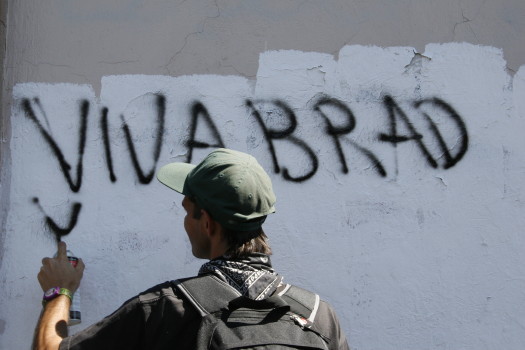
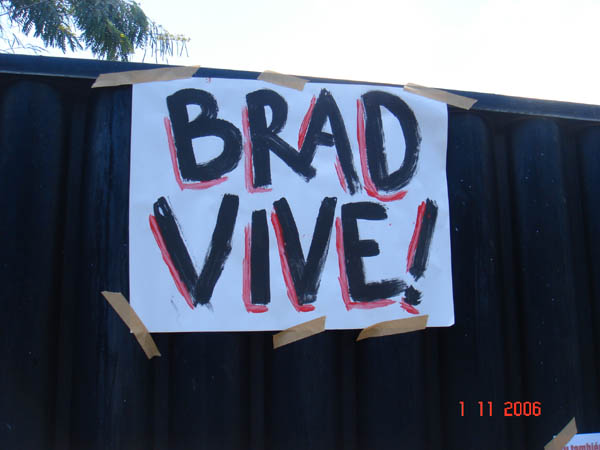
viva brad will!!
viva oaxaca libre!!
viva la lucha de los pueblos donde quiera que sea por sus derechos, los derechos humanos!!
Leer más...
martes, noviembre 07, 2006


lunes, noviembre 06, 2006
Brad, compañero y periodista - Por: Camilo Viveiros
Brad Will RIP, a companero and a journalist
Submitted by onion on Mon, 2006-10-30 01:44.
Brad Will, a friend and a friend to the international struggle for justice, was murdered. I meet Brad when went we traveled cross country and attended a radical conference in Ohio together. I remember him dancing to a contemporary dance piece during the Active Resistance conference in Chicago in the 1990s adding well done and creative art to the events.
Brad continued to dance. He danced against wrecking balls that tried to rip apart squats in New York City. He crisscrossed the global south recording and publizing the struggle for justice. He did not forget the struggle here, the last time I saw him was in NYC during the Still We Rise demonstrations against the RNC. He greeted me with his trade mark warm smile as always and was so proud of his improved Spanish skills. He was excited that he could better serve the struggles that inspire him.
He inspires us, to challenge ourselves to learn and grow to be better in service to our liberation and the liberation of others. He inspires us to live full lives, to take risks in the here and now, to never stop our dance that we must do when we listen to the voices of those fighting oppression, to never stop our dance to unite with those yearning for freedom by following the sounds of aching hearts, to never stop the dance that moves us to join those who cry in pain in the struggle, to never stop the dance that follows the rhythm of the multitudes' beating hearts for justice.
I will miss you Brad. I will miss your spontaneity, your warmth and your joy.
Brad I will dance with you, even if I am never as graceful as you are, even if I stumble and I fall and even if I am feeble at times, I will dance with you brother, forever. I love you, Brad.
Camilo Viveiros
Leer más...
Masacre en Brasil . Por Brad Will
massacre in brazil
on Fri, 2005-03-11 20:18.
by brad will
so this is my ongoing account of the tragedy here in goiania, brazil working along side the local imc please organize a protest at you local consulate so this is a report i started the day before the eviction to give you some background -- this is an independant autonomous urban landless group that came together spontaneously and reclaimed abandoned land
hey everyone i cant tell you how good it feels to be alive -- these last few days have been
incredible -- really inspiring working in solidarity with a huge land occupation in
the interior of brazil in the city of Goiania -- it has been horrifying as well --
two nights ago while i was in a bus on my way here police began terrorizing the
community with random gunfire -- just before a judge had ordered their eviction
after 9 months buildinga new life in an abandoned industrial park lost in
speculation for years -- at least 12,000 people in the country with the deepest
division between rich and poor in the world -- after the week of carnaval there were
police mobilzed from all over into the interior and now was an obvious time to
strike -- 2500 police were said to be mobilized to evict the encampment -- the day i
arrived me and companeros of the local indymedia went to the encampment, named A
Dream Made Real, to watch and report on further police harassment -- the community
had been building huge barricades of tires and steel pieces of cars and debris, they
had dug moats across roadways, there was barbed wire strung across, 24 hour security
post at 8 such barricades encircling the new villiage at the edge of the city --
there were weapons of poverty, molotovs, fireworks, clubs with nails, homemade
shields, slingshots, crudely constructed bazookas, much talk of bombs waiting for
the invasion -- and that is what the press kept calling the community, invaders --
the militancy was palpable -- we arrived after dark and it was pretty disorienting
but were welcomed due to a lot of work making certain the community knew we were
covering them differently than the local media -- i didnt even have time to get my
barings and suddenly while stumbling in the dark fireworks started going off in 3 or
4 different parts of the camp, a siren sounded like an air raid, chaos -- this was
it -- the police were making their move -- as we entered the dirt avenue which was
the main entrance the air turned sour and dark with tear gas letting loss on all
sides of us -- none had even time to get their bandanas on or even be sure what was
happening and all of us were blinded and coughing and running in the opposite
direction of the barricade into another cloud of gas -- minutes later we were set up
with vinegar and back out with a flurry of fireworks and scores of resisters
slinging rocks at their attackers -- there were percussion grenades from the police
and the gas dropped from the sky in front and behind -- a woman clutching her baby
ran past me screaming for help -- soon several people were dousing the infant with
water and were certain it was breathing -- suddenly the barricade erupted into flame
-- it was huge burst into a dark night -- a cheer rang through the resistance -- it
seemed to go on for an hour, the community charging, disbursing the gas, hurling
stones, screaming and cursing -- i was more than a little disoriented and having a
hard time with the gas -- and suddenly an alarm from another barricade shot up and
exploded like the fourth of july and we realized the police had left after only
about 10 minutes -- they were moving from barricade to barricade with gas and rubber
bullets -- we regrouped and had a quick meeting and suddenly the sirens calmed and
we realized the police had moved on -- everyone assumed this was temporary -- a
loudspeaker appeared and announcements begging for calm and voices from different
perspectives in the community were heard -- a community meeting commenced -- we
headed for another barricade and we greeted warmly as the police had moved on and
the tension started to float away -- really wonderful people -- it was inspiring
after an attack like that they were busy offering us coffee and making sure we were
alright -- the night stretched on and we lowered our guard more and more and started
to drift off to sleep next to a fire of tires and debris -- with the morning came a
new sense of security -- if they didnt come at daybreak everyone assumed they had at
least another day -- word was that if they could make it another 24 hours the police
mobilization would return to their local posts and the judicial decision shoulkd
expire -- we left the camp with thanks from people, i guess in reality we were being
human rights observers while the corporate media would hide behind the police and
would only venture into the camp to do interviews after the fighting -- we slept
some -- i returned the next night around midnight and assumed since the police hadnt
attacked yet we were in the clear until dawn -- at around 2 am 9 military police
cars drove up to main entrance -- a pattern of nightly harrasment had turned into
nightly attacks -- immediately the sky was ablaze with fireworks and then from the
police tear gas and flares and concussion grenades -- the police attack was fierce
and the community had less time to mobilize -- a battle ensued like i have never
seen -- a lot of people were talking about civil war and i thought this was an
exageration but that night i started to believe -- the police used every kind of
weapon and the sound of explosions was everywhere -- the barricades started burning
again and twice explosions rumbled through the barricade sending tires flying -- the
fighting was firce and i was much closer this time shooting video -- a group of
police were using a friends car as a safe place to send all kinds of chemical and
exploding agents into the resistance -- suddenly shots rang out and i realized the
police were using pistols and semi-automatics -- i heard screaming as i ran for
cover -- a young man had been shot on the other side of the barricade later i saw
imc video of a bullet hole clean through his bicept -- suddenly it was over -- they
just left -- it was senseless -- it was not an eviction it was terrorism -- a
military policeman was also taken away in an ambulance -- quickly members of the
community pulled me over to wall where you could clearly see the bullet holes
riddled all over the metal sheeting -- right behind my back a huge explosion nearly
knocked me to the wall -- i didnt even have time to duck -- it had come from the
burning barricade and people assumed the police hasd thrown un detonated cannisters
into the blaze hoping they would explode -- they took me to a house where as a
bullet had passed through a brick wall then through the bed curtains and through the
next brick wall -- on the other side i exrtacted the bullet -- these were military
grade semi automatic rifles -- later i interviewed a woman who was in bed and showed
the bullet holes that fly over her head as she was hiding from the fighting -- she
didnt even realize the bullet was lying on her bed after it had struck the inner
wall of her bedroom -- we assumed the worst and slept inside the encampment -- when
morning came i thought it was a vicroty -- the 24 hour limit had passed -- then i
heard word that a different person had claimed ownership to the land and there was a
new judicial process and the huge police mobilization was not being called home --
so in this same time the mst (landmess peasants movement) had been evicted twice
from differnt new rural land occupations in the countryside of goiais -- they sent
word that they knew it would help the urban squatters and sent them their solidarity
--
all the next day reports of the eviction were flying around -- one from undisclosed
police informant said they were coming in the evening not with 2500 but with 8000
police -- a force of 30 mounted military police slowly made their way around the
camp -- by the time i arrived at dusk they were wound up and paranoid -- false
alarms kept punctuating the night with fireworks going off and no one knowing what
to expect -- there was a uhge rally near the main barricade with a sound system and
mostly the evangelical christian sector of the camp represented -- definitely a
different take on jesus than the george bush voting crowd -- also there were some
local politicians and a representative from Dereches Humanos (human rights) -- ti
was beautiful with singing and prayer and a display of the majority of the camps
residents who were young families and elderly grandparents who were not going to
fight -- it was a long night and twice small groups of police snuck up on barricades
and opened fire with pistols and fled -- there were also hired goons or undercover
police with gas thrown at the barricades -- no one was sleeping and everyone was
keyed up and nervous -- word came they were definitely coming in the morning -- i
went to sleep for an hour or so near the main barricade
there is a protest right now and i need to go
i will write more this afternoon
-=-=-=-
massacre in brasil: dreams made real, part2
dawn came on confused and quiet a few milling about it was the quietest i had
ever seen the camp -- so beautiful at dawn with the light low and cool then the
alarm sounded I could see it wasnt happening now people started appearing
slowly from all points gathering around a car with a sound system for news it was
plain and simple 30 trucks on their way all full of military police all the time
the siren didnt stop ringing more people came up to the barricades many ran off
to tell their loved ones what a diverse group, old and young of every color and
description with young children in their arms and little dogs running wild
surprisingly it was less panicky than the night before they were solidifying the
barricades quickly but there was little more to do there was a quick interview of
police brass for the corporate press -- the traffic had stopped on the street
outside the encampment -- they had blocked all the roads leading to the camp -- i
had no idea what was happening on the other side but hoped there might be an escape
route there -- in the distance i could see the military police unloading from buses
-- they were geared up like storm troopers with green and black war paint -- i
photoed a line of women who had formed in front of the barricades and were praying
and crying, some with their children in their arms -- soon there were about a
hundred troops lined up in formation in three squadrons -- i started to realize just
how hopeless this was -- a call went out for everyone to be at the barricade -- huge
block of peaceful pilgrims collected there -- all ages and races with their hands in
the air -- theresistance fighters had mostly vanished -- the military started to
move in in formation with sheilds raised tight like a turtle shell -- i didnt see
anyone even throw a stone -- suddenly behind me there was an explosion -- it was a
concussion grenade launched from a tear gas rocket -- i was hiding behind the edge
of a brick wall and was completely confused how it could be behind me with my eyes
on the police -- another explotion directly behind me and i felt the slam against my
skin and my ears went deaf ringing -- they were already in the camp -- it was
pandemonium -- everyone was running and screaming -- as i ran i saw them coming from
my flank -- and aiming to shoot again not more than thirty feet away -- then all
hell broke losse -- suddenly there was gas, rubber bullets, concussion grenades on
all sides -- immediately i recognized the sound of real bullets -- i tried twice to
stop and film but only for seconds until bullets flew near by -- they were advancing
on either side of me in large groups -- it wasnt safe anywhere in the streets -- i
saw two women face down in the street -- i dont know if they were alive -- at my
feet i saw blood mixed in the dry dirt -- everywhere people running in panic and
screaming and trying to find some shelter from the barrage -- i headed to a back
yard trying to cut through the backs of houses and was slowed by barbed wire between
all the yards -- there was tall yuka plants giving me some cover as i ran -- the
military units were already past me on the main avenue and running rampant shooting
everything -- it was so terrifying -- they were shooting at anything that moved --
there was no where to go -- i looked up and a door opened and a woman was motioning
for me to come in -- i ran inside with another older couple and they slammed the
door to total darkness -- inside there were two babies trying to scream but the were
gagging on the tear gas -- they showed me a bucket of water to wash off the gas -- a
man opened the door to look out and i came around to film -- i saw military point at
us and yell something -- we had our hands in the air but he and another raised there
guns to shoot -- as the door slammed shut the bullets hit the house -- we all hit
the ground -- one woman was having a panic attack -- i could smell gas from just
outside creeping in -- they cracked a window the breathe and i could see two women
with babies and a tiny yound girl on the bed -- the whole home was one small room
and made of simple bricks and used furniture with two beds right next to the kitchen
-- it was really beautiful and simple -- i imagined the bulldozer destorying it all
with us inside -- the babies started to recover from the gas and the man opened
another window but was seen by military and there was more shooting -- everyone was
screaming i htink to get on the ground -- i didnt know what to do -- i tried to film
but paced and walked over to the corner to cry -- what in gods name was happening
out there -- the sound of shots and screaming was contant -- i was trembling --
there were police right outside yelling orders to come out -- the man yelled
something back about being peaceful -- i yelled that i was international press -- he
opened the door -- i raised my hands high with video camera in one hand -- they were
in regular uniforms the woman who was panicked before passed out right in front of
her husband as she walked out -- he grabbed for her -- the police made they they
were going to shoot -- screaming at him i guess to put up his hands but they couldnt
see his hands were holding his wife -- i yelled we needed a doctor -- it meant
nothing to them -- finally he raised his hands and dropped her there on the ground
-- i started walking out -- they had pistols drawn and pointed at my head -- i
couldnt understand what they were screaming at me but they looked like they would
shoot -- i kept repeating i didnt understand -- i was an international journalist --
they mimed to keep my head down -- as i walked out with my head down a few of they
ran up and slammed into me, twisting my arms and kicking my feet out -- i got
punched in the head and another jumped on top of me -- after they ripped the camera
out of my hand and had me in plastic cuffs they started kicking me again -- i got
one of the officers names who beat me, torres -- he seemed like he was in command
and picked me up and started screaming questions at me -- i asked if he spoke
spanish and he screamed no one speaks spanish in here -- one of the others handed
him my camera and i got a woman cop to put my glasses in my front pocket -- they
started ripping through my bag -- i told them again i was a journalist from new york
city -- they started to cut my bag off my back but i managed to explain how to get
it off -- there were other more official looking officers in white uniforms who
appeared near by and seemed to pretend they were not interested with their name tags
turned away from me
-- they yanked me back to the main avenue and motioned me to head off toward the
main entrance -- the plastic cuffs were so tight even the adreneline couldnt stop
the pain -- i was completely confused but saw women with children walking the same
direction and just followed them leaving my video camera still running in torres�s
hands -- there were troops still coming in with different kinds of uniforms -- there
was still shooting but a lot of it was further away deeper in the camp -- there was
a long empty street and i saw a cat scurry across and crouch under a fence --
everyone was getting evicted today -- as i was walking i recognized a policeman from
the corporate press interview -- he stopped me and started looking through my bag --
i told him i was a journalist from the usa -- it seemed to mean nothing to any of
them -- as he was rifling through my things a huge military policeman with a mask
pulled up and black bullet proof vest stopped and looked at my credencials -- he
said they were fake and slammed me upside the head with an open hand so hard i
almost fell off my feet except the other officer who was smiling now still had me by
the arm and was holding me steady for the other --he led me toward the entrance
where the barricades had been pushed aside -- in front of me were hundreds of
detainees kneeling on the ground -- two cuffed together at the wrist -- there was
black smoke coming up in a half dozen different parts of the camp -- i could still
here the shooting -- they pushed me onto my knees with the other prisoners -- what
the fuck next
part3
i was lost -- there were rows and rows of detainees and more being
marched hands over head in a line -- clusters of women with small
children and elderly trickled out unescorted and were shown to waiting
buses-- i had been handed over to a plains clothes policeman who
finally found my digital photo camera -- the idea of losing another
camera in one day put me in a panic -- i told him just to take the card
out and give me back the camera again and again -- he went through
every little pocket and had all these scraps of paper i had forgot to
throw away with phone numbers and addresses of people who had nothing
to do with anything and put my passport and my camera in a separate
plastic bag with these things -- i kept asking if he could cut off the
plastic cuffs and replace them -- he just wandered away with my bag
after placing a guard right over my head -- a couple dogs were on the
lose and one came close and he kicked it -- the militarty police kept
yelling insults and kicking people who were sitting on the ground --
the pain in my back was making it hard to sit but if i relaxed at all
it would push on my hands andthe pain would shoot into me -- the hard
brazilian sun was beating down and i was sweating hard -- i looked up
and there was a local companero from indymedia pointing at me -- he
wasnt even in cuffs -- they came over and he started explaining we were
together -- what an incredible relief -- i wasnt alone -- soon another
was discovered -- his video camera had also been stolen -- they cut off
my cuffs and my whole body sighed -- we were separated from the mob
scene and placed in neutral territory baking in the sun between the
prisoners and a tent where the hard core military police were in the
shade celebrating their victory -- they would come marching out in
formation singing songs -- it was twisted i looked in some of their
eyes and there was just darkness -- it was like they had no souls, cold
hard steel killers-- i saw other undercover police with a computer and
some really young ones getting into a car -- there was a lot of talk of
infiltration the days before -- time crawled -- eventually we were
placed on a bus with all the other prisoners -- i coulnt figure out
which was worse for us, being isolated or lost in the herd -- but with
the other imcistas i was calmed -- at the police station it was mayhem
-- paperwork took forever -- we were led to an area turned into a
medical station -- there were pools of blood on the floor starting to
turn black at the edges -- people were getting stiches for head wounds
-- i saw a guy with bandages all over his head caked in blood -- he
described a bullet passing through his scalp -- he was refusing more
medical treatment --- he looked scared -- there was movement everywhere
and every available space was utilized with scores of prisoners -- it
was a much more mellow scene -- there was a journalist who spoke
english and i told her i was beaten and they stole my camera but no one
say it on the news -- i got a medical check and slowly slowly we made
our way to the federal police -- i was the only foreigner -- as we
drove out there were other imcistas outside trying tofigure out were we
were off to -- there were crowds of young people who had gone to school
that day and were gloomily waiting for their parents -- looking at them
they could be from anywhere, any class and country, all clean and in
their nice clothes with book bags -- we sped away -- at the federal
police the snails pace continued as they argued about my visa -- i had
a tourist vias but they said i was working as a journalist -- we
explained that my work with the imc was completely unpaid -- they said
they were going to cut me loose with a court date in june -- ok -- then
they wanted to go copy all the photos in my camera -- this took about 3
hours and suddenly i was buzing away and ready to pass out ----
so many stories to tell -- i only have written about what i saw so far
but now i need to write about the witness accounts -- people said they
saw bodies being dragged to the water wells and dumped, they saw bodies
thrown into burning buildings -- no one knew how many were still
missing -- all night there were military ambulances leaving the
encampment -- all night imc volunteers were at the hospitals and these
ambulances never arrived -- a massive orchestrated coverup was underway
while i collapsed that night -- people working in the hospitals were
afraid to talk with us -- they were already bulldozing houses -- in the
jail so called leaders were being selectivle pulled into special
holding for interogation -- children still looking for their parents --
streams of refugees -- there was no government plan what to do with
these people -- the next morning there was a gathering called for at
the catholic church -- i asked if the police would be there waiting and
a friend said never, after what happened the day before, this was the
center of the city -- there was a sound system and people scattered
everywhere in and out of the church sleeping -- most of them didnt even
have a change of clothes -- i talked to many who had their money, their
identification and their cell phones stolen -- everyone was hungry --
was takijng pictures and say a gathering near the alter and it looked
like they were distributing food -- i walked up and there were two open
caskets -- it was more than i could handle -- they were floating in
pools of flowers and surrounded by loved ones crying -- little children
didnt seems to understand -- one had pictures of he and his wife,
hisnew home in the encampment, them on a vacation -- so proud and full
of life -- the other had strange marks on his hand and everyone told me
they were the initals of the policeman who killed him -- some kind of
weird trophey marking -- i was spilling out and dizzy i stumbled away
and cried -- they could have been anyone, they could have been me --
the police said they died shooting eachother and the corporate media
repeated it unquestioned -- the two official deaths -- outside there
was a huge line waiting to report missing people -- their faces -- i
turned away -- there was some distribution of clothing and soap and
bread but it was a mad house people pushing and desperate clutching
babies -- i went with a friend who said she was getting food at the
market for the church kitchen -- i went to a safe house to rest a while
and people came running in to tell me about the attack -- undercover
police had infiltrated the rally that started at the church and had
grabbed on of the so called leaders to arrest him -- the people werent
having it and started to fight for their companero -- the undercovers
pulled out their guns shooting in the air and were barely able to flee
the scene running into a forming block of military police who were
suspiciously near by in large numbers -- the community was there for a
funeral -- despite the gunplay they assembled for a march carrying the
caskets to a huge park then buses took them to the cemetary -- after
the funeral the buses went to the mayors office and everyone camped out
for hours -- a storm was brewing black clouds in the distance and the
wind kicked hard -- there were different proposals on the loudspeaker
and people decided to go to two gymnasiums set aside for housing --
what a dark night
www.midiaindependente.org
See also:
http://brasil.indymedia.org/pt/blue/2005/02/307913.shtml
http://www.defenestrator.org/?q=node/112
Leer más...
domingo, noviembre 05, 2006
URGENTE: DESAPARECIDOS EN OAXACA
Sábado 4 de noviembre de 2006
Toledo envía lista de 61 desaparecidos
El pintor Francisco Toledo envió al diario LA JORNADA una relación con los nombres de 61 "personas víctimas de detención arbitraria (por efectivos de la Policía Federal Preventiva) y de quienes se presume desaparición", ya que no se presentó ningún fundamento legal ni información respecto a la autoridad a cuya disposición serían puestos.
En la lista, elaborada por organizaciones como la Liga Mexicana por la Defensa de los Derechos Humanos, Servicios para la Educación Alternativa, Red Nacional de Jóvenes Católicas por el Derecho a Decidir y Naxwiin, se encuentran las siguientes personas: Rodolfo Ruiz Hernández, Marvin Peralta Hernández, Diego Hernández López, Gerardo Jiménez Vázquez, Erick Ortiz López, Félix Jiménez Damián, Pedro X, Víctor Ruiz García, Carlos Alberto Hernández Cárdenas, Abel Martínez, Luis Antonio Félix, Jaime Gaspar Ruiz, Juan Alberto Vázquez y Ubaldo García Guzmán.
Además, Héctor Guzmán Acosta, Isabel Galindo Aguilar y Armando Aguilar, ubicados como estudiantes de la Facultad de Ciencias Políticas y Sociales de la UNAM, detenidos frente al Instituto de Ciencias de la Educación de la Universidad Autónoma Benito Juárez de Oaxaca (UABJO), y Javier Moreno Colmenares, profesor y coordinador regional de Telesecundarias de Ixtlán, detenido frente a la tienda Fábricas de Francia y llevado, presumiblemente, a la base aérea de La Raya.
En la lista están también Angel Santos Callejos Rodríguez, Juan José Flores Cruz, J. Antonio Aparicio García, Javier Moreno Colmenares, Francisco Núñez Bazán, Alfonso Rutilio García, Hugo Jarquiw, Daniel Almedo, Inti Martínez, Diego Nicolás Hernández, Fernando Ruiz Santos, Marcus García Martínez, Juan Flores Cruz, Fermín García Silva, Sergio Rojas Juárez, Amado Agustín Bautista, Carlos Javier Alarzán, Bulmaro Martínez González, José Daniel Carreño Cruz, Eliud Martínez González, Sergio Rojas Juárez, Francisco Fernando Aragón Murales, David Ricardo Ramírez Zárate, José Angel García Hernández, David Hueska Hernández, Aldo Hernández Jiménez, Samuel Ortiz, Arnaldo Rojas Galán, Máximo Reyes Pérez, Víctor García, Angel Soto Gallego, Roberto Natalio Ramírez Zárate, Félix Ricardo Méndez Venegas, Fernando Ruiz Santos, Diego Nicolar (sic) Hernández, Juan Crisóstomo Aparicio y Martín Cruz Rodríguez.
Marcos García Martínez, de 70 años, desaparecido a las 6 de la mañana en la esquina de Cinco Señores; Mario Trinidad Michel López, profesor de la sección 22, en Santo Domingo Teojomulco; Eduardo Hernández Mendoza, 22 años, quien -afirman las organizaciones- "salió temprano y no ha regresado" ; Teodoro Tiño Verado, a quien la última vez se le vio en la Chevrolet después del cerco de la PFP; Valentín Pérez Hernández, de 18 años "quien salió temprano y no ha regresado, viste chamarra café y gorra roja". Al final está el nombre de Isaías Vázquez Mireles.
Leer más...
sábado, noviembre 04, 2006
The Hardest Story to Write
unday, October 29, 2006
Bradley Roland Will 1970-2006
The Hardest Story to Write
New York, New York, US - I was preparing the entertainment Friday night for a Halloween Critical Mass after party, when a friend of mine in a dragon costume told me that people were looking for me, and that my longtime friend and roommate Brad Will may have been killed by gunmen in Oaxaca City, Mexico. Okay, I knew that at least nine people had already died since the Popular Assembly of the People of Oaxaca (APPO) took control of the city in recent months, but Brad couldn't really have been killed. They couldn't have shot Brad. After all he was a journalist, and a "gringo" journalist at that. Most importantly I knew Brad and I was expecting to see him tomorrow when he was due to return home, so how could he actually be dead.
Soon there were many people at the party who also knew Brad and no longer felt like celebrating. The horrible news had been confirmed, there were even pictures online, which I wish I had not seen.
When the paramilitaries arrived at barricade three in Santa Lucia del Camino Brad was ready, camera in hand. When the paramilitaries began firing live ammunition at the protesters they were answered with rocks, slingshots and fireworks. Brad armed with only his camera stood with them, until after a short lull in the shooting, he was shot twice in the chest. He died on the way to the hospital. Esteban Zurita Lopez and a teacher Emilio Alonso Fabian were also shot and killed at the barricades Friday.
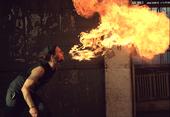
Brad was equally comfortable doing yoga in Central Park with his raw foodist friends, singing with eco-hippies and activists at an Earth First! campfire out in the wilderness, and moshing along to a punk rock show at one of New York's City's scummiest, formerly illegal venues: C-Squat. He was a performer who loved to be up front with an acoustic guitar or a fireball spewing from his mouth. Brad was an anarchist, through and through; he believed in making the world a just place without hierarchy and oppression. His death was as political as the life he lived.
When a small non-profit collective group I work with began looking for a storefront, after loosing our lease at another space, Brad offered to put a substantial amount of money towards the project. Nobody asked him or expected him to, nor did he have any interest in having a say in the project -- he was just a generous person who cared about change and wanted to see more community spaces in the city.
Brad's presence was a ubiquitous presence in the NYC activist community. He had a lot of energy and was a part of a lot of struggles. When a young anarchist protester named Carlo Giuliani was shot by police Brad was outside the Italian consulate singing at the top of his lungs, his voice raw and hurt.
I've seen the land beyond these borders where the corporations rule
And they spin their lies and they globalize and the working man's their tool
And the streams are so polluted that their banks are bleak and bare
And the babies all are born deformed and the smog is everywhere
And the workers' wages dropped thirty percent in just one year
Now the greedy bastards want to bring that situation here
And you called upon me brother and you asked what could I do
And I told the truth dear brother, when I spoke these words to you:
I will stand beside your shoulder when the tear gas fills the sky
And if a national guardsman shoots me down I'll be lookin' him in the eye
And if I will wash their pepper from your face and go with you to jail
And if you don't make it through this fight I swear I'll tell your tale
And I will stay with you in the prison cell in solidarity
And I will not leave that cursed room 'til you walk out with me
For we the people fight for freedom while the cops just fight for pay
And as long as truth is in our hearts we're sure to win some day
I will not falter when the iron fist comes out of the velvet glove
I will stand beside you brother and defend this land I love
I've heard the tales from conquered islands where the sweatshop barons rule
Recruiting girls from the Asian slums to be the rich man's tool
And they're promised lives of luxury in the golden U.S.A.
And then they're stranded on these islands with their passports stripped away
And their aging fingers toil and bleed year after grueling year
Now the greedy bastard want to bring those same conditions here
And you called upon me sister and you asked what could I do
And I told the truth dear sister, when I spoke these words to you:
"I will stand beside your shoulder when the tear gas fills the sky
And if a national guardsman shoots me down I'll be lookin' him in the eye
And if I will wash their pepper from your face and go with you to jail
And if you don't make it through this fight I swear I'll tell your tale
And I will stay with you in the prison cell in solidarity
And I will not leave that cursed room 'til you walk out with me
For we the people fight for freedom while the cops just fight for pay
And as long as truth is in our hearts we're sure to win some day
I will not falter when the iron fist comes out of the velvet glove
I will stand beside you brother and defend this land I love
I've walked the tall and misty forests, pulsing vein from ancient time
And they'll cut the heart out of a mountain to kill the oldest thing alive
Now the rainforest dwellers smell a burning, and the 'dozers are close behind
Replaced with plantations and cattle, plowing under whatever they find
With the rain comes a raging mudslide, where the land was stripped and cleared
Now those greedy bastards want to bring those same conditions here
I've watched the oceans rolling, schools of fish running under the tide
Working fishermen grounding their bodies, starving on a hook and line
While industrial fishers haul in their nets, scoring the deep ocean floor
Dolphin and sea turtle snagged in those nets will ride those waves no more
They rip the heart out of the deep blue sea, their boats increase every year
Now the greedy bastards want to push their bloody products here
And you called upon me brother and you asked what could I do
And I told the truth dear brother, when I spoke these words to you:
I will stand beside your shoulder when the tear gas fills the sky
And if a national guardsman shoots me down I'll be lookin' him in the eye
And if I will wash their pepper from your face and go with you to jail
And if you don't make it through this fight I swear I'll tell your tale
And I will stay with you in the prison cell in solidarity
And I will not leave that cursed room 'til you walk out with me
For we the people fight for freedom while the cops just fight for pay
And as long as truth is in our hearts we're sure to win some day
I will not falter when the iron fist comes out of the velvet glove
I will stand beside you brother and defend this land I love
I will not falter when the iron fist comes out of the velvet glove
I will stand beside you brother and defend this land I love
- By Desert Rat and Brad
Leer más...
Brad Will in Boog City
From Boog City Issue 24, April 2005
Fragments of a Shattered Hope
Brazil Makes War on Sohno Real Squatters
by Brad Will
The first time I ever squatted was almost an accident. I was living in Boulder, Colorado, and all of my crazy poet roomies fled the scene. I stayed and didn’t even have the phone number for the landlord.
I came to the LES looking for trouble and I landed, broke and confused, on my friends. They took me in at the 5th Street squat, urban camping with water from the hydrant, bucket flush toilets, and unpredictable electricity. Eventually the city came with a wrecking crane, and I almost got knocked down with the building. The city didn’t care that I was still inside trying to stop the horror.
I floated to different squats in the ’hood for years and fought the good fight for housing, and I dug in deep and locked down in the community garden struggle. They stole my heart, those old tenements, and the simple captured plots of green free space. Pure direct action—you are not talking politics and yelling in the streets; you are doing it, making it real, and sharing it with the community.
Wanderlust eventually did me in. I reached South America as a media activist with contacts from IMCistas I met squatting at the Independent Media Center office in New York City. I visited MST (the landless workers movement) rural encampments in Brazil, and saw a whole different side to squatting.
I came to Goiânia, Brazil after I connected with some great IMC media activists in Porto Allegre at the world social forum. They told me of a squatter’s encampment called Sohno Real (real dream) in their city within the interior of the country. The court fight got them nowhere and they started to dig in. They surged on the abandoned land nine months before, after the owner of the land hadn’t paid taxes in over 30 years. A couple of months later it was election time and the governor promised them they could stay, and they started building for real. It was all talk.
The first day I arrived in the city, I was still dazed from hard travel and hit the camp just as night fell. There was a pattern of nightly harassment that was escalating. The night before the police had shot some rounds randomly to scare people guarding the barricades. The barricades were inspiring, layers of tires piled in a hermetic order locking into each other vertically, and some had moats with bamboo spikes and barbed wire. Near the barricades people were at the ready—
T-shirts for masks, some with slingshots and Molotov cocktails, but the norm was a nice big stick. Many of the warriors were in their teens and were excited, but they didn’t really seem to know what was in store. Others were battle-hardened soldiers from other occupations in the region. There were eight barricades, all of them guarded night and day. It got really dark without streetlights, and it was disorienting.
Two nights in a row the police came to attack after midnight. Tear gas crept up, concussion grenades exploded everywhere. Two nights in a row the barricade burst into flames and lit up the night and the community fought back, their silhouettes floating, blurring in pure black inside the inferno. Slingshots singing, fireworks spraying, a Molotov would miss its mark. The police brought it up with incendiary flares and rubber bullets. The second night they used real bullets—they have such a distinct sound as they whiz by your head. Inside the camp someone was screaming with a bullet wound clean through his bicep. A policeman was wounded. They vanished and the barricade kept burning for hours. No one knew if they would return in a few minutes or never.
We got no sleep. Daylight always came up strange and brilliant in the camp. So cruel was this beauty, the contrast at dawn—the sun smiling on the simple homes and the flowers opening their eyes, pineapple and banana trees, gathering water from the well, a black spot in the road where the tires had burned through. There was silence but for a few feet slowly making their way to work, to scrap through the trash for cardboard or bottles or cans. The women were off to market, or the kids on their way to school yawning.
Life pulsed on just like the neighborhood next door. Poor folks were trying to get by living, loving, arguing, cooking, and sharing. Some had settled in nicely, selling everything they owned to buy bricks and mortar. All of them were basically single-room dwellings with a simple garden outside with yucca, squash, or kudzu. Some were still camping in a shanty tent with a black plastic roof. There was a communal kitchen that fed those who needed it. There were all sorts of Christians, lots of Catholics, tons of believers, evangelicals of a different breed than the Bush voters back home. Everyone was so nice. I wasn’t greeted with suspicion but with a smile and a hand. You pass a small simple home and they ask you in for coffee. It was great kindness, generosity, and dignity, in spite of the poverty they faced. They had built a dream in the dust—a new people’s village, a giant squat, a community.
Night returned after rumors flying all day. They had a regular Bible revival rally with singing and little kids and a few politicians. It was beautiful, hands all raised in prayer for peace, for a new life. All the while the paranoia was creeping and chattering, gripping your teeth. No sleep again, the morning dead quiet. Then an announcement on a loudspeaker: 30 trucks on the road, full of military police. The governor had promised 2,500 police and they were on their way. People trickled to the main entrance, but there was no panic. Slowly the police closed the roads, slowly their buses filled the plaza, slowly they unloaded their human cargo. Inside people sang the national anthem of Brazil. A group of women formed a line to pray hard and loud. Soon a large group joined them with children and white flags. The night warriors were not to be seen. The police formed blocks and started to move in with black and green battle paint, bulletproof vests, shields, and helmets, ready for war. Everyone stood terrified, unsure what to do.
Suddenly we heard explosions behind our backs. There was gas inside the camp. The police were already inside shooting. Another explosion directly behind my back pushed my body forward and my ears started ringing. Everyone scattered in a panic. Military police with pistols drawn were right behind me, one of them kicking a woman. I ran, but there was nowhere to go. Shots whizzed past my head. I headed for the back yards and leaped through the yucca bushes where I saw an open door and a welcoming hand inviting me in. Everyone was affected by the gas and in a panic. A little baby was vomiting. A man of the house opened the door and I started filming, and twice got shot at by passing military police. They came screaming, but I could only understand bits and pieces. I was explaining I was a journalist from the U.S.A. The police, with their pistols pointed at my head, didn’t seem interested in my credentials. When they hit me it was first in the back of the head, then one threw me down, three or four kicked me, then one on top hard with his knee in my back. Then the plastic handcuffs like a vise. I got on my feet looking for my video camera. What the fuck happened? I stumbled dazed in the sun into a different group of police. One smacked me on the side of the head and almost sent me to the ground, except another was holding me up. Later I realized they were being gentle with me.
The police came marching out in formation singing songs celebrating their victory—”We will put a sword in your skull and drink your blood!” Twisted. I looked into some of their eyes and saw darkness, cold hard soulless steel. Soon I was in the mayhem at the police station. The pain started to settle in to the bone. There was a first aid area with puddles of blood starting to turn black at the edges. I saw people with stitches, broken arms, and bullet wounds in the head. They moved me along and after eight hours cut me loose. Over 800 were arrested and the bulldozers were busy all night. People said they saw bodies being dumped in the water wells and thrown into burning buildings. People were shot in the head while on their knees. No one knew how many were still missing.
All night there were military ambulances leaving the encampment. IMC volunteers were at the hospitals and these ambulances never arrived. People saw trucks full of dirt entering in the night and leaving still full of dirt and something else. A massive cover-up was underway. People working in the hospitals were afraid to talk with us. One later came forward in secrecy and told us there were 20 violent deaths reported at the morgue; on a normal day there are one or two. In the jail so-called leaders were being selectively pulled into special detention for interrogation. Children were looking for their parents. There were streams of refugees and no government plan for what to do with these people. They went to the Catholic cathedral to sleep and rallied in the morning. They gathered to write down the names of the disappeared. There was a mass funeral the next day. An undercover agent infiltrated and tried to arrest someone randomly, and got beaten down by the crowd until his buddy fired over everyone’s head. Only two official deaths were listed, but we may never know how many for real. People moved into two gyms across town for refugee housing. A young man looked me in the eye. “This is Brazil,” he said “it is not the north east and the beaches or Rio and Carnival—now you know the real Brazil.”
Back at the encampment they had their way with the houses. Scorched earth policy, every house was destroyed. A horse was tied to a post, waiting for someone who was not coming. Butterflies and strange birds flew in the sunflowers and corn left to blaze in the heat. Heaps of belongings and bricks and scrap wood lay everywhere. A dead vulture was at the bottom of a well. Sohno Real became a living land without shade, a new dump, fragments of a shattered hope.
Everyone I knew was shattered and paranoid. The history of the military police in this state is brutal. Nothing seems to have changed here in the interior since the end of the dictatorship. Everyone—the politicians, the media, university students, the middle class—talked about youths in the slums turning up dead after a tall tale from the police; about re-adjusting your car in the middle of the night and a few days later having an unexpected accident; about complete impunity, about midnight disappearances. Two people from the community who testified got late night calls threatening their life. Every phone had echoes and seemed tapped. The police were the muscle for the land-owning elite, which was clinging to a colonial power that had yet to vanish.
Everyone kept telling me I should leave town or go into hiding. I was lost but something was holding me there. There was an image I couldn’t get out of my mind—a thin woman curled up fetal and broken lying in a short pool of water at the bottom of a well. I was haunted.
I would visit the gyms where everyone was sprawled around with fragments of foam mattresses and bundles of clothes in plastic bags. Life was pushing forward. The bathrooms were packed and filthy. Lunch was the only meal and it was mayhem, people pushing and grabbing, little kids all confused and vanishing under a sea of desperate arms. Folks weren’t happy, spending most of the day sleeping just trying to make it through. These people were working hard to build a new home and suddenly they are piled up and waiting, some washing a few clothes and hanging them on the fence next door, some sitting in the shade waiting for news, the kids running wild and looking for mischief. A passing car hit one young child. I could feel the weight in everyone’s eyes. There is a stress that lingers deep and settles in, the unknown, the not forgetting, the clinging doubt, the silent fear, a held breath, the missing. They are all missing.
One warm day the community was on the march. Both gyms mobilized and they walked to the camp. They joined up en route and the joy was overflowing. It was a family reunion. They rallied at the entrance where the military police had invaded, together for the first time since the funeral. There was hope. There was a call to action for global solidarity put out on the internet and there were actions at the embassies and consulates in Amsterdam, Buenos Aires, New York City, Oslo, and Washington. The federal government stood up and took notice after people made trips to Brasilia, the capital, using my video as principle evidence. The parliament voted to federalize the investigation. One breath and it will fall into place. All the pieces are ready and they are waiting. All of them, the children, the warriors, pregnant mothers, the unsettled spirits, are waiting. On the one-month anniversary, the young people organized a simple theater of the eviction. They were learning to heal. Time skips a beat, pushing through, and the struggle continues. The dream never died.
http://bradwillboogcity.blogspot.com/
http://www.flickr.com/photos/tags/bradwill/?page=24
Leer más...
Archival Footage of Slain Journalist and Activist
Monday, October 30th, 2006
Brad Will In His Own Words: Archival Footage of Slain Journalist and Activist Discussing the Importance of Community Media and the Struggle Against NYC Demolition of a Lower East Side Squat
Listen to Segment || Download Show mp3
Watch 128k stream Watch 256k stream Read Transcript
Help Printer-friendly version Email to a friend Purchase Video/CD
We turn to some archival footage of Brad Will, the U.S. journalist and activist shot dead in Oaxaca on Friday. We play a recording of Brad from the late 1990s at a time when he hosted a radio show on the pioneering microradio station "Steal This Radio" and a recording of Brad talking about efforts to prevent New York City from demolishing a squat on the Lower East Side. [includes rush transcript]
We turn to some archival footage of Brad Will. The following was recorded in the late 1990s at a time when he hosted a radio show on the pioneering microradio station Steal This Radio.
Brad Will, speaking in 1998. Courtesy of Paper Tiger Television.
Brad is also remembered by many for his efforts to prevent the city from demolishing a squat on the Lower East Side. When the city moved in to demolish the building on Fifth Street he stood atop the roof waving his arms. Brad's efforts stalled the demolition but the city eventually leveled the building which housed a cafe, a meeting place and a performance space. Brad later talked about the building in a program produced by Paper Tiger Television called "ABC Survives, Fifth Street Buried Alive."
Brad Will, excerpt of program, "ABC Survives, Fifth Street Buried Alive." Courtesy of Paper Tiger Television.
RUSH TRANSCRIPT
This transcript is available free of charge. However, donations help us provide closed captioning for the deaf and hard of hearing on our TV broadcast. Thank you for your generous contribution.
Donate - $25, $50, $100, more...
AMY GOODMAN: We turn to some archival footage of Brad Will. This was recorded in the late 1990s at a time when he hosted a radio show on the pioneering microradio station, “Steal This Radio.”
BRAD WILL: I think for the FCC, micro media that is non-commercial, anti-profit, community-based, is poison to their program of supporting corporate control of the media. And what they are interested in is supporting the National Association of Broadcasting and their complete leveling of culture in the United States, their complete clear-cutting of American tastes and values and trying to propagate through Congress, through elected officials, through lobbyists, through huge amounts of money being thrown into the media spectrum, their ability to control what people think. And that’s really what’s at stake, is the free flow of ideas in people's minds that is so much controlled by the media as we know it and especially the mass media that has the public ear and that really dominates people's lives.
You know, New York is a very isolating place in a lot of ways, and I think the Lower East Side is one of the few places that’s actually still a community. And it’s easy for people to kind of fall into that go home, turn on the TV and eat their dinner and try to survive mentality that takes so many people away from an awareness of what’s really going on, and on a micro level, on a local level, a community level, you know, that there’s a community space right down the block that’s under threat. You know, CHARAS/El Bohio has been sold by the city, and it can be stopped. And what people need to know is that it’s possible, it’s not over, or that even if one garden falls, that there are still so many more to save and that there’s still a chance.
And the concrete things is that people come up to me and talk to me about things they want to be heard on the radio, events that they want to propagate and demonstrations that they want people to show up for. And, you know, people come up to me and tell me about my show and are really appreciative, you know, about what I’m trying to do and what we’re all trying to do: save this neighborhood, save ourselves.
AMY GOODMAN: Brad Will is also remembered by many for his efforts to prevent New York City from demolishing a squat on the Lower East Side. When the city moved in to demolish the building on Fifth Street, he stood atop the roof waving his arms. Brad’s efforts stalled the demolition, but the city eventually leveled the building, which housed a café, a meeting place and a performance space. Brad later talked about the building in a program produced by Paper Tiger Television called ABC Survives, Fifth Street Buried Alive.
BRAD WILL: We were making a home out of a crumbling building. The interior of the building needed help, and we brought that building back to life. It was standing strong. And the only reason it was standing was because people were living in it. If we had let it go the way the city wanted it to go -- they tore out the stairwell, they punched holes in the roof. The water -- the rain was rotting that building from the inside out. We replaced the joists. We rebuilt the floors. We sheetrocked the walls and made the building alive. What did they do? They killed it. That building is over a hundred years old. It was standing strong.
AMY GOODMAN: That was Brad Will, as he was talking about squats in New York. Leslie Kauffman, can you talk about these squats, for people who have never even heard the term?
LESLIE KAUFFMAN: Well, they were abandoned buildings that had been just standing vacant for years and years all over the city, but there was a particularly strong movement to rehabilitate these buildings in the Lower East Side. And really, they were homesteaders. I mean, it’s a longstanding all-American tradition. They took over these abandoned properties, and they fixed them up and created spaces for people to live who had nowhere to live, and much as those who created the community gardens in New York City were homesteaders, too. They took over abandoned lots and cleared them of bottles and used needles and all the garbage that was there and turned them into spaces of beauty and hope.
And Brad so much believed in creating that kind of hope and beauty in the world and found himself in conflict with the authorities over and over again, because, for example, the City of New York wouldn’t let that stand, wouldn’t let the squats continue, wouldn’t let homesteaders get the deed to their own place, wouldn’t let the community gardens flourish.
AMY GOODMAN: I wanted to go back to Gustavo Esteva in Oaxaca, the columnist for La Jornada. You knew Brad, and I was wondering the significance of having U.S. journalists and activists come down to Oaxaca. How do you see it?
GUSTAVO ESTEVA: He was in our office a week ago. And you have been listening to some examples of Brad’s passion for life and beauty. He had a genius to discover where life was, where it was flourishing, and sharing his own passion with our passion for life. It is really one of the many paradoxes that he died in his search for life. And it is also a paradox that he is now being used as a subtext for more killing and more oppression. His death is really used now by the authorities saying that it is a justification, it is because of this kind of violence that they are bringing in the police for more oppression and more aggression and more killings.
Yes, Brad was with us just a few days ago in our office, with our people, working together. We have been involved in one of the activities of Indymedia. And he was with us and with [inaudible] -- that is one of our collaborators. He was very close to [inaudible], and both [inaudible] and Brad were working together in their supporting. And, of course, also Brad had this specific genius for reporting what was happening, what he was capturing, these living elements that he was discovering in the middle of the movement.
AMY GOODMAN: John Gibler, there is a protest planned for today in Oaxaca?
JOHN GIBLER: Correct. They’ve -- yesterday the APPO provisional leaders, and as well just the word that was running through the crowds on the street, was to pull back at night, to not fall into provocations, to not fall into violence, to take back the streets during the daytime today.
As Gustavo mentioned, the control of the city depends how you define “control.” If it's presence of armor and automatic weapons, then the mainstream media might think that the police have control. But if it’s the spirit of the people and the people taking to the streets, even in the face of continued paramilitary attacks and the police invasion, then the people of Oaxaca strongly retain control of the city.
I was greatly impressed yesterday by the numbers of people that came out to fill the barricades, and people from all walks of life, entire families, people holding their children, walking right up to the police to put flowers in their armor and then march with them instead of confronting them. And I think that the response today will be similar, that it will be thousands and thousands of people taking to the streets to march and to stand in the barricades.
AMY GOODMAN: Gustavo Esteva, do you see Oaxaca today as Chiapas, what, more than ten years ago?
GUSTAVO ESTEVA: We are the same. Chiapas is still alive here in Oaxaca. And in a sense, we are a fruit of Chiapas. It was an awakening created by Chiapas. When in Chiapas ten years ago they said, “Basta! Enough! We have enough of this system, of this oppression,” that was something that awakened us here in Oaxaca. We had, of course, our own long struggle, but Chiapas is here with us right now. We are joining in the same kind of struggle for democracy now, for our definition of our own life. “We want to define us,” the Zapatistas said. This is exactly what we are saying today in Oaxaca. We want a world in which many worlds can be embraced. We want a harmonious coexistence of the difference.
Perhaps the Oaxaca movement today, it is one of the best expressions of one element, brilliant element, of contemporary movements all over the world. That is, a policy of one no, many yeses, in which in the past you had movements that would have one no and one yes and saying an affirmation to something and denial to something. Here, we have a no to something and accepting the plurality of yeses, the plurality of affirmations, the plurality of life. Here in Oaxaca, you have -- this is the only state, in which the majority of people are Indians, and they belong to sixteen different indigenous cultures. Here, we have the plurality as -- it is also natural and cultural plurality via diversity. And you have this expression of a movement that is saying no to this government or no to this oppression, no to this kind of political regime, no to this kind of economic organization. But we are accepting, we are not attached to any specific ideology or any specific leader or any specific organization. We have many yeses. We are accepting the plurality of our world, and we want to find ways for the harmonious coexistence of these different people.
AMY GOODMAN: Gustavo Esteva, we are going to turn now to a tribute to Brad Will from his friend and fellow musician, David Rovics.
To purchase an audio or video copy of this entire program, click here for our new online ordering or call 1 (888) 999-3877.
http://www.democracynow.org/article.pl?sid=06/10/30/1535244
Leer más...
